Thursday, April 16, 2015

Winter 1946 - An Implication of Assurance and Tradition?

In 1977, art historian Robert Rosenblum named Andrew Wyeth as the most overrated and underrated artist of the 20th century (Adams). Andrew Wyeth, one of America’s most well-known 20th century artists, caused debate within the art world. Some believe he was a realist painter, while others say that he worked in a regionalist style. The North Carolina Museum of Art puts Andrew Wyeth’s "Winter 1946" painting into their modern collection, although many art critics believe this painting completely opposed images produced by 20th century avant-garde artists. "Winter 1946" was contradictory to the work of other artists’ in Wyeth’s time because while most modern artists attempted to question what were then socially accepted values by pushing for innovation and change within society, Wyeth accepted the current state of society and enjoyed being part of the middle-class. In "Winter 1946," Andrew Wyeth combines the traditional, small-town values of his father and his hometown of Chadds Ford, PA along with his own interpretation of modern art through realism and regionalism.

Andrew Wyeth’s childhood is a contributing factor to why his work in "Winter 1946" differed from artists around him. Wyeth has stood out from others around him ever since he was around his siblings. His oldest sibling, Henriette, became a still life and portrait artist. His brother Nathanial became a mechanical engineer, while his other two siblings, Ann and Carolyn, became a musician/composer and a painter, respectively. Wyeth, on the other hand, was born with a bad hip and feet that pointed outward when he walked. Due to his physical limitations, he was homeschooled by a series of tutors and spent his free time making drawings, exploring the woods with friends, playing with toy soldiers, and dressing up in costumes that his father used as an aid in his illustrations (Adams). While his father, N.C., encouraged his children to develop their talents and specialize their careers accordingly, Wyeth lived much more of a “traditional” childhood.

Andrew Wyeth differed not only from his siblings, but his father as well. N.C. was known for his high energy and large stature, while Wyeth was a small, delicate boy plagued with many childhood illnesses (Kimmelman). N.C. still treated Wyeth just like his siblings, however. This caused Wyeth to grow close to N.C., and he learned a lot from both his father and the tutors he met with while being homeschooled.

N.C.’s teachings to Wyeth were mostly art-related. N.C. was a cartoonist who used highly intense and energetic colors throughout his artworks. Although Wyeth intended to match his father’s intensity in his artwork as well, he pictured things differently. N.C.’s photos were action-packed, drama-filled, and included people, while Wyeth’s work usually had no people in it. Wyeth’s works were often snowy landscapes, barns, tire tracks, abandoned houses, and empty fields (Kimmelman). One example of a painting that one could expect from Andrew Wyeth is the one below (Sunday Times), which was competed by Wyeth in 1987. Although N.C. was Wyeth’s primary mentor, Wyeth still decided to branch away from some of the things that N.C. taught him.

"Sunday Times," 1987, Andrew Newell Wyeth, watercolor on paper  
One of Wyeth’s most famous pieces, "Winter 1946," is an example of the contradiction he faced when publishing his work. Since Wyeth received most of his art instruction from his father and grew very close to him, he was devastated by his father’s death in 1945. N.C. was driving in the car with his grandson in Chadds Ford, PA, when the car somehow stalled on railroad tracks. A mail train drove right into the car, killing N.C. from a broken neck and hospitalizing his grandson, Newell. Wyeth says his father’s death gave him an “emotional reason” to paint, and "Winter 1946" was the first painting he completed since his father’s death (Adams). This painting is fairly simple and could be classified as either realism or regionalism. Realism is artwork which portrays actual life events without exaggerating the setting, while regionalism is an art style in which the artist focuses more on rural life and ignores the city and/or technology. Here, we can see a boy running down a hill, dressed in winter clothes with his left hand out. Contrary to the vast majority of his works, Wyeth decided to include a person in "Winter 1946" because the boy painted here serves as a tribute to his father. Wyeth later told his biographer and close non-family friend, Richard Meryman, that the boy was Allan Lynch, a local boy he saw running down the hill when he went back to visit the scene of his father’s death. Wyeth decided to join Allan, and the two rolled down the hill in an old baby carriage they found nearby. Wyeth told Meryman that this incident is what inspired "Winter 1946" (Adams). The fact that Wyeth painted "Winter 1946" based off of an actual event in his life at the actual scene of his father’s death shows the realism that this painting incorporates, and the fact that the setting used here is in an open field by the train tracks away from the city allows the viewer of this painting to classify "Winter 1946" under regionalism as well. 

"Winter 1946," 1946, Andrew Newell Wyeth, tempera on board
In this photo (above), Lynch (the boy pictured) is turning away from his shadow - something that will always be a part of him, symbolizing Wyeth losing his father. Wyeth told Meryman, “The boy was me at a loss, really … His hand, drifting in the air, was my hand, groping, my free soul” (Adams). This makes sense because at first glance, one may wonder why Allan’s hand is out on what appears to be a cold day. Although the skid marks located at the bottom left hand of the painting stem from the baby carriage in which Wyeth and Allan rolled down in, they really symbolize the train tracks on which N.C.’s car stalled. If we imagine the boy in this painting to be Wyeth instead of Allan, we can see that he is looking at these marks in the grass with disgust, and in a way, walking away from the tracks, or the death scene.

The simplicity of "Winter 1946" is another point of significance since most artists in the 20th century used complex abstraction in their artwork, compared to the realism and regionalism exemplified by Wyeth here. Wyeth once said, “I think the great weakness in most of my work is subject matter. There’s too much of it” (Kimmelman). When Wyeth refers to “subject matter,” he means what he wants his audience to focus on. Although "Winter 1946" is a fairly simple painting (a boy running down a dormant hill with a fence and grass on the side), there’s a lot that Wyeth wants his viewers to focus on here. The death of Wyeth’s father, the spotting of Allan Lynch, and the experience Wyeth and Allan had together are all experiences involving contrasting emotions that are all somehow crammed into one painting. Michael Kimmelman of the New York Times states that Wyeth produced “images of absence, silence, loss, abandonment, desolation but also expectation.” The realism Wyeth uses in "Winter 1946" helps draw his audience in, while the isolated setting that comes from regionalism allows for the audience to feel like there is something more to this painting. While most 20th century artists used complexity to show high amounts of subject matter present in their work, Wyeth was able to go one step further by presenting all of his subject matter through simplicity.

Wyeth’s ability to “keep it simple” in his paintings was something other artists did not do at this time, and understanding the context behind "Winter 1946" helps us see how Wyeth valued family dearly throughout his life, which is common for middle-class Americans. The use of Allan Lynch in this painting also shows that Wyeth is a traditional middle-class citizen who feels comfortable with his hometown.

Another thing to take note of is the medium that Andrew Wyeth used to create this piece. When Wyeth first started to learn from his father, he used watercolor, a medium his father recommended. By 1938, Wyeth started primarily working with tempera, which is egg yolk mixed with paint. Wyeth produced "Winter 1946" with tempera, and said that he stopped using watercolor because it was too shallow (Adams). The thing that is most striking about tempera is that it’s a medium that was most popular leading up to the Renaissance art movement, which started back in Italy in the early 1300’s! Tempera is difficult to work with due to its fast drying time, and was replaced by oil paint in the Renaissance art movement. Tempera paint usually tends to create colors that are more along the dull side, as it is harder to show contrasts in the lights versus the darks when comparing it to oil paint. The lack of color contrast in "Winter 1946" not only gives off the impression that it is winter time, but also helps the viewer see the regionalism portrayed by this piece. It truly does feel like this painting takes place in an isolated setting, and to think that Wyeth stopped using watercolor, a medium proposed by his greatest teacher, his father, and switched to tempera, an extremely old-fashioned medium, once again shows the value that Wyeth puts on tradition.

Wyeth put an incredible amount of realist emphasis into "Winter 1946" as well. We can see things such as Allan’s shadow, the color texture on Allan’s jacket buttons, and the lighting on his face compared to his hand. One of the most shockingly realistic parts of this piece is the grass and fence drawn on the left-hand side. We can see each blade of grass drawn at an angle, allowing us to feel the wind present on this day. The wooden fence poles are shaded in a manner that shows the sun shining from the left of them, and this can also be proven by the shadows of the wooden posts. The amount of realism that Wyeth used here is shocking because abstraction in art was becoming very popular in America in the mid to late 1940s, and "Winter 1946" was finished and released in 1946, right at the peak of American abstraction (below is an image from the NC Art Museum’s modern collection that was released shortly after "Winter 1946") (Kimmelman). This was a courageous move from Wyeth, once again emphasizing his value put on tradition. 

"Berkeley No. 8," 1954, Richard Diebenkorn, oil on canvas
Stephanie Dudek from Canadian Psychology makes the claim that modern art stemmed from avant-garde artists, which would imply that 20th century art was filled with avant-garde artists. She defines avant-garde artists as those who work from a position of isolation while striving to express things they have experienced as "their life world." One example of an avant-garde artist Dudek uses is Picasso, stating, “Picasso's cubist images called attention to the dislocation of body and spirit in response to a radically changed life world” (105). Avant-garde artists are also known for producing pieces of art that are unusual but innovative. Applying all of these definitions to the 20th century “modern artist” and considering Andrew Wyeth’s painting, "Winter 1946", isn’t it safe to say that Andrew Wyeth falls under the category of an avant-garde artist, even if "Winter 1946" doesn’t fit the stereotypical modern art image? "Winter 1946" was a perfect example of Wyeth attempting to express his father’s death, an experience he went through in his own “life world.” Wyeth once said, “I paint the things I know best,” and that definitely holds true in this painting through his use of the hill by the train tracks and Allan Lynch, a boy from his hometown of Chadds Ford (Adams). Another famous quote from Wyeth was, “What you have to do is break all the rules” (Kimmelman). Wyeth broke the rules with "Winter 1946" by sticking to realism, regionalism, and using tempera, while other artists around him were pushing for abstraction and using watercolor.

Wyeth’s work in "Winter 1946" is a wonderful representation of the adversity he faced throughout his life, especially in his younger years. Wyeth is a charming example of a typical middle-class American citizen, and understanding the relationship he had with his father reinforces this idea. Although some may not understand why "Winter 1946" is considered modern art, it truly is the perfect example of avant-garde. Wyeth’s use of realism and simplicity in "Winter 1946" serves as its own type of abstraction, and his value put on family and hometown are portrayed through the subject matter of this painting. His use of tempera as a medium shows that he is one who feels comfortable sticking to a traditional lifestyle, which is why "Winter 1946" helps us understand the overlooked importance of accepting and enjoying the current state of society around us today.


Monday, April 6, 2015

Unit 3 WIP - Andrew Wyeth


My original image: Winter 1946, Andrew Newell Wyeth


1) Turkey Pond, Andrew Wyeth, 1944


Turkey Pond is tempera on panel, which was completed by Andrew Wyeth in 1944. This photo is a simple one, which portrays Walt Anderson (one of Wyeth’s close friends) in his childhood years. This painting is similar to Winter 1946 in both color choice and style. This painting has long grass, which was seen on the left edge of Winter 1946. The picture’s primary colors are shades of brown, again similar to Winter 1946. The fact that Wyeth painted a picture of a close friend of his also helps reinforce the idea that his art is inspired by those close to him, as Winter 1946 was influenced by his father’s death.

2) Baleen, Andrew Wyeth, 1982


Baleen is a painting done by Andrew Wyeth in 1982. This painting is very minimalistic, which is a reoccurring theme in Wyeth’s works. Since this painting does not have much to it, it allows for all kinds of interpretations of the piece. Baleen means whalebone, which causes one to wonder what exactly is going on in this picture. We know there is a man looking into the sea, but one may ask if the title of this painting holds some level of significance. One again, we see that Wyeth uses brown throughout this painting, and this painting also gives off a feeling of curiosity, just like the above picture (Turkey Pond).

 3) Christina's World, Andrew Wyeth, 1948
 

Christina’s World is arguably Wyeth’s most famous painting, and it was completed in 1948. The painting portrays Wyeth’s neighbor in Maine, who had physical limitations due to Polio. Once again, the main colors of this painting are shades of brown, and tall grass is used. Just like Winter 1946 and Turkey Pond, the photo can be argued to be minimalistic, and also only has one individual which serves as the main subject. The fact that the woman painted here is meant to resemble Wyeth’s neighbor once again shows that people Wyeth knew personally in his life inspired his works. This painting also gives off a feeling of mystery, which was a feeling also present when viewing Winter 1946. 

4) Teel’s Island, Andrew Wyeth, 1976 


Teel’s Island is a painting done by Andrew Wyeth in 1976, which shows an empty sailboat in what appears to be a farmland. Just like Baleen, this picture allows for a wide variety of interpretation. The long, dormant grass is a common theme seen in Wyeth’s paintings, and it is once again being used here. The painting is realistic and minimal, which provokes curiosity out of the viewer of this piece. Although Wyeth’s main subject here is a sailboat rather than an individual, we once again see here that a common tactic of Wyeth is to have one item serve as the main subject of his painting, while surrounding the main subject with long, dormant grass and a farmhouse in the background. 

5) Master Bedroom, Andrew Wyeth, 1965


Master Bedroom is a painting done by Andrew Wyeth in 1965, which shows a dog sleeping on a bed in the middle of the day. This is another simple but yet incredibly realistic painting done by Wyeth. We can see the light coming in through the windows and hitting the bed, showing us that the dog is sleeping in either the morning or afternoon. The idea of using one main subject comes back up again here, as the dog is the center point of this piece. This piece stirs up feelings or relaxation and gentleness, which is another theme in Wyeth’s work that had yet to be mentioned. Wyeth’s paintings cause the viewer(s) to feel like they have a connection with the subject of the piece, and his paintings either cause feelings of innocence or worry and mystery. 


Work In Progress 3 - Cameron Gardner

Mysuseter III


This piece of art is an abstract painting from 1991 which makes it contemporary. The painting is not recognizable, and features many different colors all mixed together which means it is abstract, just like the art I have chosen. This painting can take many different shapes and appeals based on how you look at it. To me the painting is saying something regarding human nature and our environment, and the relationship between mankind and the earth. This is very similar to "Lines that Link Humanity" in the way it causes the viewer to think of the relationship between man and earth.


The Trash Men

This piece of art is actually many different, life size statues made from trash depicting men. This art was constructed to raise awareness about the growing problem of trash disposal and pollution. Like these men, my art piece is constructed from thousands of pieces of recycled metal and bottle caps. Even though my art may not be attempting to raise awareness about pollution, it can not help but to lead by example in resourcefulness
Abstract Painting


This piece was created by Julie Mehretu from Ethiopia. My artist, El Anatsui is from africa, and his art takes many influences from traditional african art. Both artists are concerned about the future and what it holds, and they create omens in their artwork. They lead the viewer to think about how the world has changed, and if that change is for the better or worse.

Colorful Abstract


This large painting is contemporary as the artist is still alive, and is abstract due to the not physical images. The painting has vertical dividers like “Lines that Link Humanity” that seem to separate different parts of the piece. Color is very important in this piece just like in the one that I have chosen. The lines and color definitely serve a much larger purpose of expressing an underlying emotion, that which the observer decides.


Gravity and Grace


This piece of art is very similar to “Lines that Link humanity”, due to the fact that they are created by the same artist, El Anatsui. This piece of work called “Gravity and Grace” conforms to all of the types of artwork that
“Lines that Link Humanity” takes a part of including contemporary, abstract, recycle/reuse, and African art. This piece of work is just as large as the one I have selected and is presented in the same way, hung from a wall.

Unit 3 Work in Progress

Luncheon in the Studio by Edouard Manet


This painting by Edouard Manet is significant for two primary reasons. First, the impressionist works of Manet inspired Thomas. You can see shared painterly qualities in both artists’ works. Secondly, the placement of people in this picture and Thomas’ Three Graces are quite similar. Both place the focus on a central character, who is flanked on both sides by people who are turned towards the focus.


Din, une très belle négresse by Mickalene Thomas


This painting is significant because it helps us see the common characteristics of Thomas’ works. In both this painting by Thomas, and Three Graces, the focal point is an African American woman in 1970’s attire. The background in both portraits is filled with vivid color, and simple patterns.


Dreams by Jacob Lawrence


This painting by Harlem artist Jacob Lawrence shows how the Harlem Renaissance influenced Thomas’ works. The themes of Thomas’ works are distinctly different from that of the Harlem Renaissance. While Harlem artists generally focused on themes of black oppression, Thomas’ is more concerned with women’s beauty. Thomas’ still borrows some of the styling of Harlem works, however. Like Harlem artists, the backgrounds of Thomas’ works are often abstract, or lack detail, and are filled with vivid colors.


Portrait of Madame Matisse by Henri Matisse


This painting is significant because of the style of portraiture it showcases. Thomas’ writes that Matisse was one of her primary inspirations while she painted. Like Matisse, Thomas’ did not concern herself with the finer details of portraiture. Instead, she used pure colors and painterly brush strokes to capture some impression she had of her subjects. While Thomas’ works are not nearly as painterly as Matisse’s Fauvist works, you can see the same disregard for detail in her portraits.


Pam Grier from boxingkangaroostudios.com


This modern work found online is significant because it embodies Thomas’ subjects’ style. Many of the figures Thomas paints look like the characters of a Blaxploitation film. Her subjects adhere to the same style and stereotypical appearance as the characters Pam Grier (depicted left) would play on film.

Unit 3 Work in Progress Post

Here is a link to Intermission, by Earl Mueller, which is the piece I chose.
 http://ncartmuseum.org/art/detail/intermission

Image 1

http://heathercreamer.weebly.com/uploads/2/6/3/3/26336416/2950340_orig.jpg
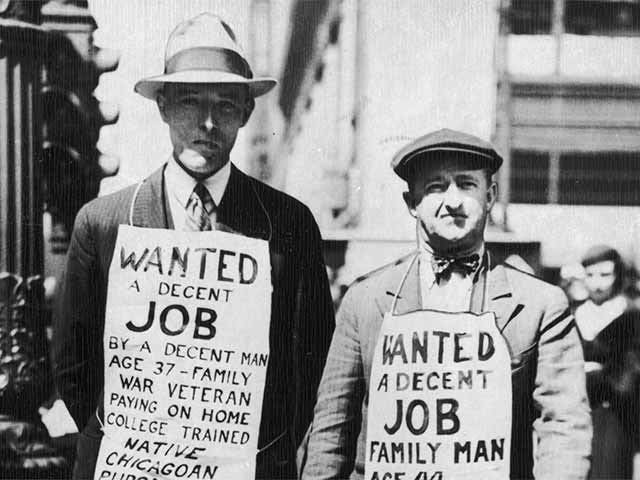
This is an image from the Great Depression era. Intermission was probably heavily influenced by the Great depression, since it was produced a few years after the Great Depression ended. This image features two men who are looking for jobs. The piece I chose seems to have a focus on making fun of the wealthy, so ideas for that could have stemmed from times like the one featured in this image.

Image 2

http://ncartmuseum.org/art/detail/jon
This piece, Jon, is another piece by Earl Mueller. I believe an important theme for Jon is isolaion. It is similar to the piece I picked because it's also listed under the modern category, and uses similar coloring. It also includes the isolation theme, which is present in Intermisison.

Image 3
http://ncartmuseum.org/art/detail/mill_end
This is another piece by Earl Mueller. It's reminiscent of the Great Depression as well. Earl Mueller seems to be making a statement about the financial differences at the time. There doesn't seem to be anything wrong with the house in the picture, but the way it's portrayed makes it seem run-down. There's also a sense of unrest.

Image 4
http://en.wikipedia.org/wiki/Great_Depression
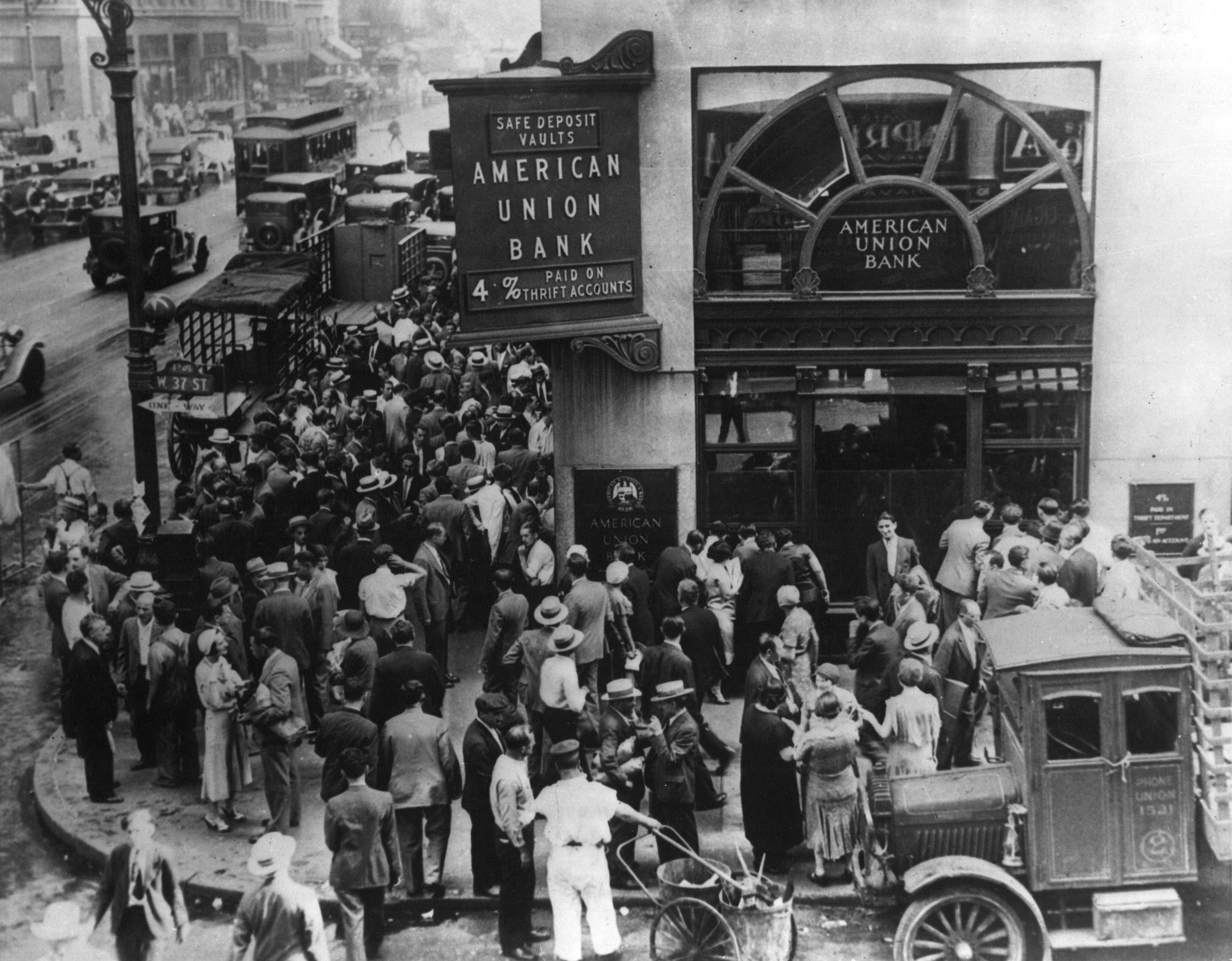
This is an image of a crowded street corner during the Great Depression. It's crowded in this scene, which relates to Intermission. This image could also be an example of conditions during the Great Depression that influenced Intermission. In this picture, it seems like individuals in the crowd are interacting with each other in little "groups", like how it is in Intermission.

Image 5
 https://sites.google.com/site/2adreannaneff/home/causes-of-the-great-depression
This is an example of a newspaper headline of the infamous stock market crash. On the newspaper, you can see "attempt made to italy's crown prince". It shows the distance between the wealthy and the poor, which seems like a big theme in Intermission. This also takes place during the Great Depression.


Monday, March 30, 2015

Auto ethnography - Spanish Culture


Works Cited


Autoethnography Podcast - Gamer Stereotypes


Why are video games fun? (2011, August 8). Retrieved March 1, 2015, from http://www.eurogamer.net/articles/2011-08-08-why-are-video-games-fun

Granic, I., Lobel, A., & Engels, R. (2014). The Benefits of Playing Video Games. American Psychologist, 69(1), 66-78. Retrieved March 1, 2015, from https://www.apa.org/pubs/journals/releases/amp-a0034857.pdf

Strategy-Based Video Games, Like Starcraft, Improve Brain's 'Cognitive Flexibility' (2013, August 24). Retrieved March 1, 2015, from http://www.huffingtonpost.com/2013/08/24/video-games-brain-starcraft-cognitive-flexibility_n_3790610.html

Loria, D. (2014, September 20). 15 Ways Video Games Make You Smarter And Healthier. Retrieved March 1, 2015, from http://www.businessinsider.com/video-game-health-benefits-2014-9#

Boot, W., Kramer, A., Simons, D., Fabiani, M., & Gratton, G. (2008). The effects of video game playing on attention, memory, and executive control. Acta Psychologica, 129(3), 387–398-387–398. Retrieved March 1, 2015, from http://www.sciencedirect.com/science/article/pii/S0001691808001200